
Bringing Morocco home
Morocco’s souks are a treasure trove, and few travellers leave without something to carry the trip home. But the markets hold everything from genuine craftsmanship to mass-produced trinkets, and knowing the difference, and how to buy well, makes the shopping part of the adventure rather than a source of regret. At Sahara Marvels we like our guests to come home with things they’ll treasure, not clutter, and a little guidance goes a long way toward that.
The best Moroccan souvenirs are the ones rooted in real craft and local materials, objects with a story and a use rather than a dust-gathering novelty. Years later, the good ones are still in daily use around the house while the trinkets are long forgotten in a drawer somewhere. Buying them well is partly about knowing what to look for and partly about a few simple habits in the souk, both of which are easy to pick up and turn shopping into one of the trip’s pleasures. This guide covers both: the genuinely worthwhile buys and how to purchase them without overpaying, so the souks become a pleasure to navigate rather than a place to feel outmanoeuvred. Our 10 Days Desert Tour from Tangier pass through the markets and cooperatives where the real treasures are found.
Argan oil, the liquid gold
Argan oil is one of Morocco’s signature products, pressed from the nuts of the argan tree that grows almost nowhere else on earth. It comes in two forms: a cosmetic version prized for skin and hair, and a culinary version, richer and nuttier, used in Moroccan cooking. Both make excellent, genuinely useful souvenirs that carry a real taste and craft of the country, and neither takes up much room in a suitcase. A small bottle of good argan oil, in particular, is the kind of gift that feels far more thoughtful than its modest cost, and it introduces friends at home to something they’ve probably never tried. It is Morocco in a bottle, quietly useful long after the trip is over, and a reminder that the best souvenirs are the ones that earn a permanent place in everyday life.
The key with argan oil is buying the real thing, and the best way is at a cooperative, often visited on the road to Essaouira, where you can see it being traditionally pressed and know it’s authentic. Cheap versions in general shops may be diluted. Bought well, argan oil is a souvenir you’ll actually use, which is the mark of a good one, and its scent alone will carry you back to Morocco every time. Our 4 Days Desert Tour from Marrakech can include a stop at an argan cooperative where you see it made.
Carpets and textiles
Moroccan carpets are among the country’s most celebrated crafts, hand-woven by Berber women with patterns and colours that carry regional meaning and generations of tradition. From bold tribal rugs to finer woven pieces, a genuine Moroccan carpet is a work of art and often the centrepiece souvenir of a trip, an object that holds real value and beauty for a lifetime.
Buying a carpet is an experience in itself, usually involving mint tea, a display of many pieces, and a good-natured negotiation. Take your time, ask about the origin and materials, and don’t feel pressured to buy on the spot. A good seller will happily talk you through the piece without rushing you toward a decision. Beyond carpets, Morocco offers beautiful textiles, blankets, scarves and cushion covers that make lighter, more affordable takes on the same craft tradition, ideal if a full rug is more than you can carry. Our Merzouga 4×4 Desert Excursion bring you to the regions and markets where these textiles are made.
Leather, metal and pottery
Morocco’s craftsmanship extends across materials, and several make excellent souvenirs. Leather goods, bags, poufs, slippers, are a specialty, especially in Fes with its famous tanneries, where the leather is worked by centuries-old methods. The quality of genuine Moroccan leather is high, and the pieces are both beautiful and useful, softening and improving with age rather than wearing out.
Metalwork and pottery are equally rewarding. Engraved brass and silver lamps, teapots and trays catch the eye in every souk, while the distinctive glazed pottery and tilework, particularly from Fes and Safi, brings Morocco’s colour and pattern into a home. These crafts carry real skill and regional character, making them souvenirs with genuine substance rather than mere mementos, each piece the work of an artisan rather than a factory, and often signed by the workshop that made it. Our Sahara Marvels — Morocco Tours pass through the craft centres where these pieces originate.
Spices, tea and edible treasures
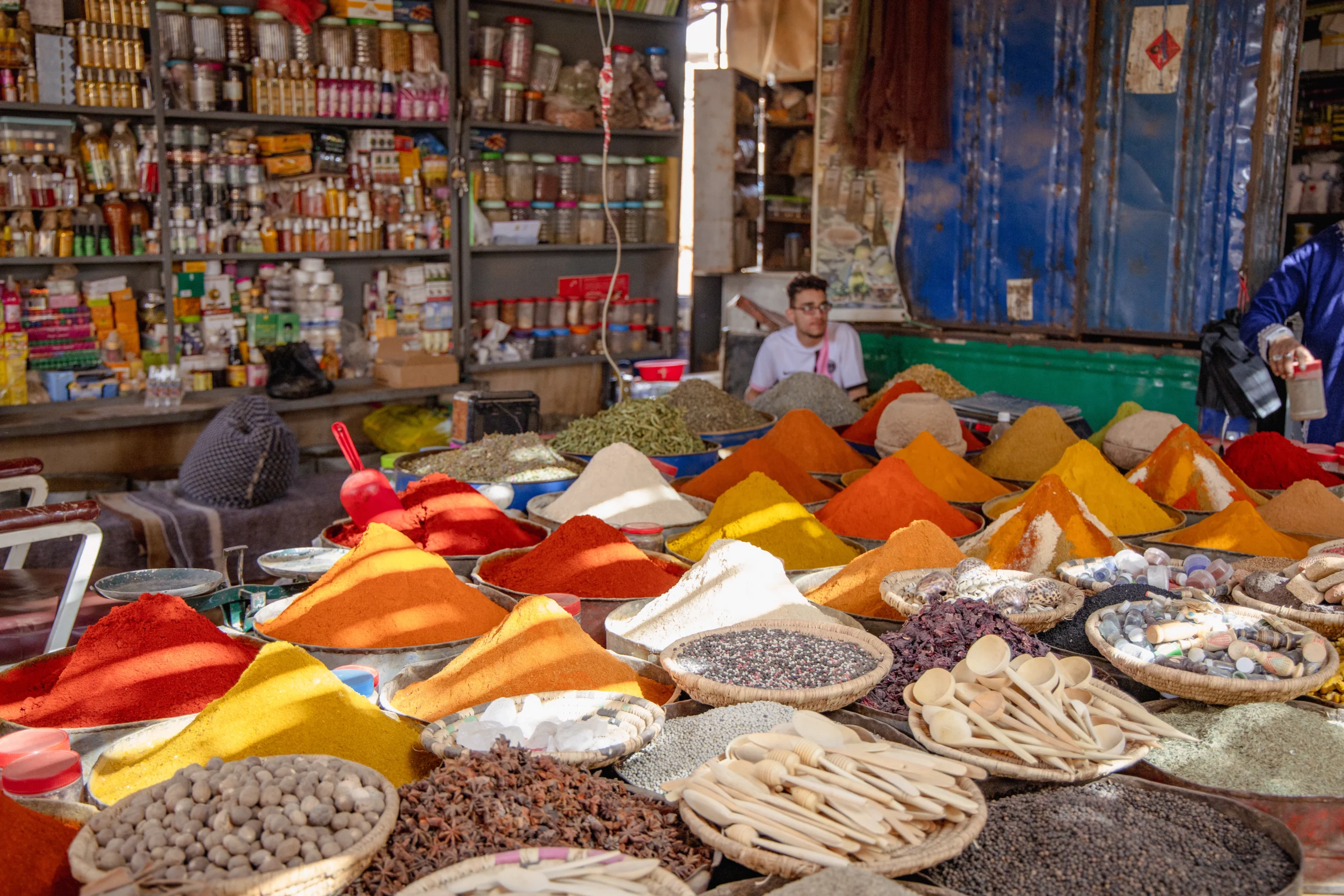
For souvenirs that are lighter to carry and delicious to use, Morocco’s culinary treasures are hard to beat. The spice markets overflow with colour and aroma, and blends like ras el hanout, along with saffron, cumin and dried herbs, let you carry the flavours of Moroccan cooking home. Moroccan mint tea and the elegant tea glasses and pots to serve it make a lovely, evocative gift.
Dates from the oasis valleys, traditional sweets and pastries, and preserved delicacies round out the edible options. These make excellent gifts and gentle souvenirs, affordable, authentic and genuinely enjoyable, and they let you relive the trip through taste long after you’re home. For many travellers they’re the most-used souvenirs of all, quietly seasoning meals at home for months after the trip. Our 10 Days Desert Tour from Tangier travel through the markets and oases where these flavours are found.
Buying well in the souks
Whatever you buy, a few habits ensure you shop happily. In the souks, most prices are negotiable, so expect a friendly back-and-forth rather than a fixed tag, and don’t be afraid to take your time or walk away. Having a rough sense of a fair price, and buying because you love an object rather than under pressure, keeps the experience enjoyable and the purchase satisfying.
For higher-value items like carpets or silver, buying from reputable cooperatives or established shops offers more assurance of quality and authenticity. A knowledgeable guide can point you toward trustworthy sellers and away from the tourist-trap versions, which is worth a great deal when you’re buying something you can’t easily assess yourself. Shop with a little knowledge and a relaxed attitude, and the souks become one of the great pleasures of a Morocco trip. Our 4 Days Desert Tour from Marrakech can guide you to trustworthy sellers and genuine craft.
Shop the souks with Sahara Marvels
Morocco’s most worthwhile souvenirs are the ones rooted in real craft and local materials: argan oil bought at a cooperative, hand-woven Berber carpets and textiles, Fes leather, brass and silver metalwork, colourful pottery, and the lighter edible treasures of spices, tea and dates. Buying them well means embracing the souk’s friendly negotiation, taking your time, and favouring reputable sellers for higher-value pieces.
The Sahara Marvels team routes its tours through the markets, cooperatives and craft centres where the genuine treasures are found, with guides who can steer you toward trustworthy sellers. To plan a trip that brings home souvenirs you’ll truly treasure, get in touch using the button below. Our Merzouga 4×4 Desert Excursion are your gateway to the authentic crafts and flavours of Morocco.
Frequently Asked Questions
What souvenirs are worth buying in Morocco?
The most worthwhile are rooted in real craft and local materials: argan oil (buy at a cooperative for authenticity), hand-woven Berber carpets and textiles, Fes leather goods, brass and silver metalwork, colourful pottery and tilework, and lighter edible treasures like spices, ras el hanout, mint tea and oasis dates. Favour objects with a story and a use.
How do you buy argan oil in Morocco?
Buy argan oil at a cooperative, often visited on the road to Essaouira, where you can see it traditionally pressed and know it’s authentic. It comes in a cosmetic version for skin and hair and a richer culinary version for cooking. Cheap versions in general shops may be diluted, so the cooperative is the safest source for the genuine product.
Should you haggle when buying souvenirs in Morocco?
Yes, most prices in the souks are negotiable, so expect a friendly back-and-forth rather than a fixed tag. Take your time, have a rough sense of a fair price, and don’t be afraid to walk away. Buy because you love an object rather than under pressure. For higher-value items, reputable cooperatives and established shops offer more assurance.
What is the most popular Moroccan souvenir?
Moroccan carpets are among the most celebrated, hand-woven by Berber women with regional patterns, often the centrepiece souvenir of a trip. Argan oil, leather goods, metalwork, pottery and edible treasures like spices and mint tea are also hugely popular. The best souvenirs are genuine crafts with real materials and a story rather than mass-produced trinkets.
Useful Resources
For more background on the destinations and experiences mentioned in this guide, explore these authoritative resources: Atlas Mountains — Wikipedia, Dades Valley — Wikipedia, Marrakesh — Wikipedia, and Morocco — Wikipedia.
Book Your Morocco Trip
Ready to discover Morocco and the Sahara Desert? Get in touch with Sahara Marvels today and let our team design the perfect tailor-made Morocco journey for you.